My Bullet Journal: From Physical Notebooks to My Own App
Discover how I adapted the Bullet Journal method to organize my routine and why I decided to transform that experience into a free web application.
My Bullet Journal: Organization and Productivity with a Personal Touch
Introduction
A well-crafted introduction is essential to engage readers, but to be completely honest: I'm still sharpening that skill. 😅 Just kidding - I don't like fluff either
So let's get straight to the point: if you already know what a Bullet Journal is, feel free to skip directly to My Bullet Journal Method.
What is a Bullet Journal?
The Bullet Journal is a personal organization system created by designer Ryder Carroll. It brilliantly combines (🚨 OPINION ALERT!) elements of a diary, a traditional planner, and a to-do list.
The method's biggest advantage is that it was designed to be 100% flexible and adaptable to the user's needs. Instead of forcing yourself into rigid boxes of pre-printed planners, you build a system that works for your brain. It uses specific symbols to categorize tasks, events, and notes, enabling quick visual reference and tracking (Rapid Logging).
Why Does the Bullet Journal Work?
- Total Flexibility: Highly customizable. You only build what you actually use.
- Centralization: Keeps all your tasks, events, and thoughts in a single location, eliminating scattered sticky notes and notebooks.
- Creative Expression: Allows you to express creativity through custom layouts, drawings, and visual trackers.
- Intentional Mindfulness: The simple act of writing by hand (and reviewing tasks) heightens awareness of where your time goes, fostering focus and presence.
"My Method" of Bullet Journaling
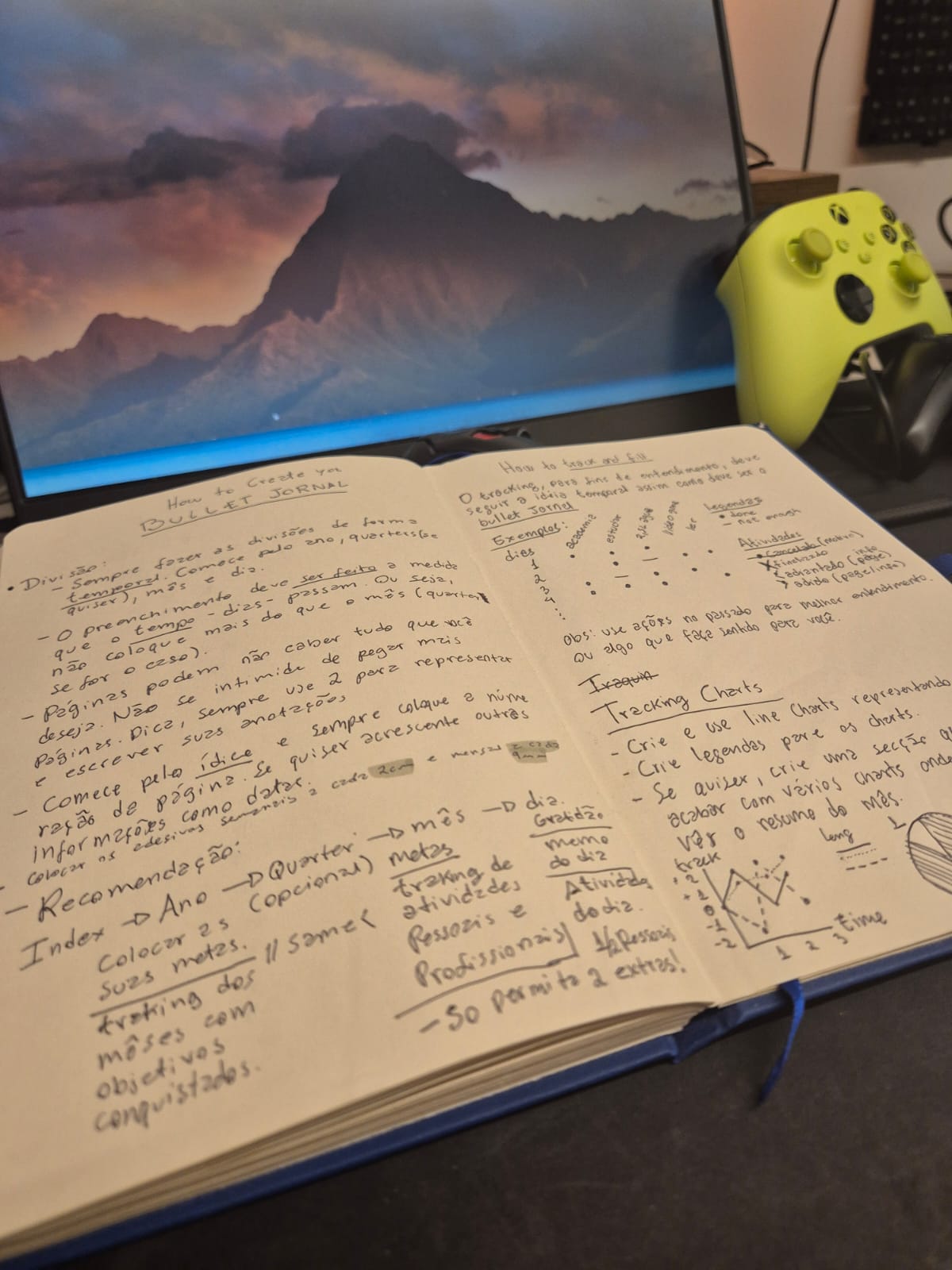
Tip:* The best part of Bullet Journaling is that there are no global fixed rules, but it is essential to create your own rules and follow them consistently.
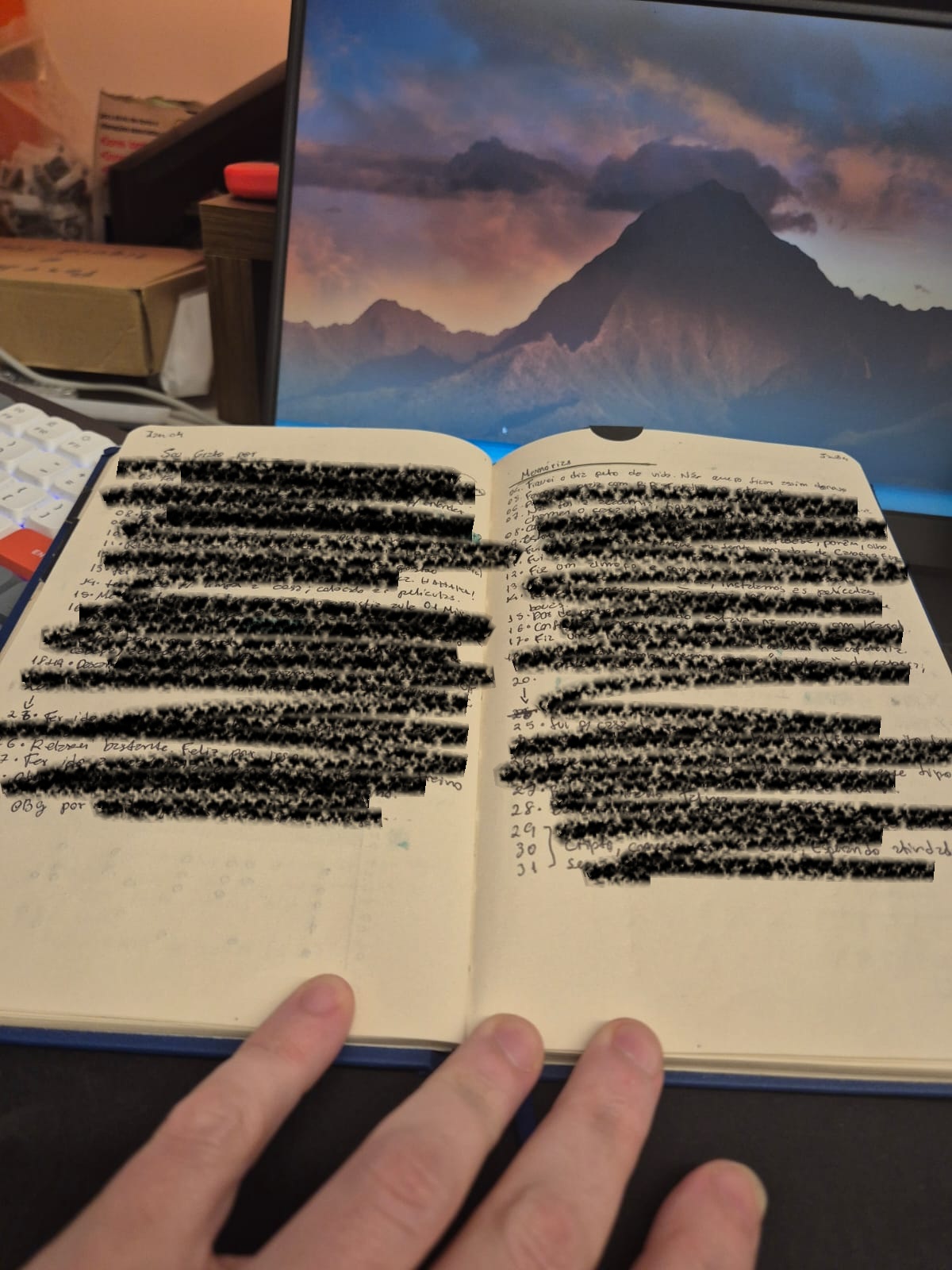
- 15-Day Cycles: Instead of traditional monthly planning, I split my time into 15-day sprints (just like agile development sprints).
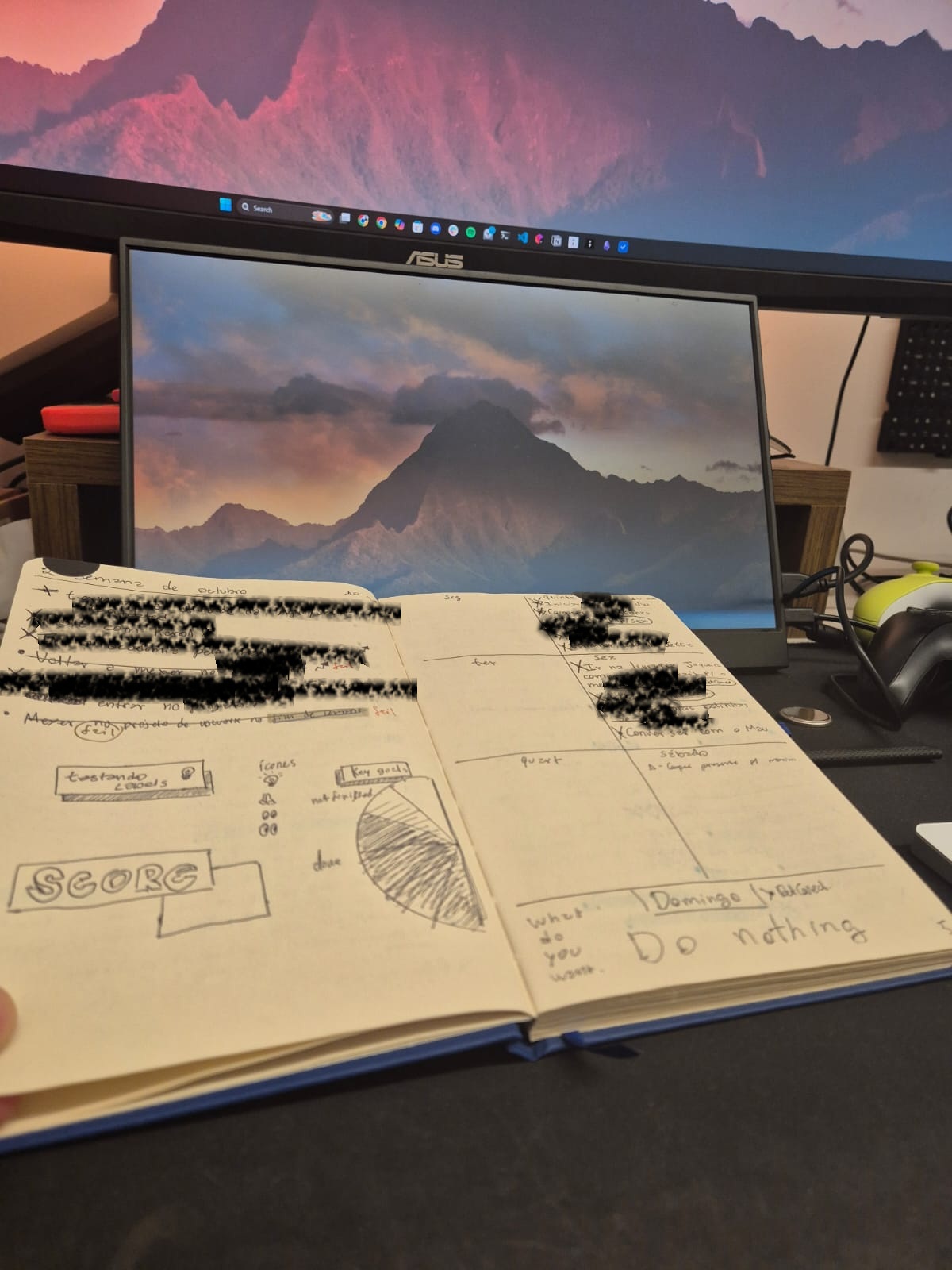
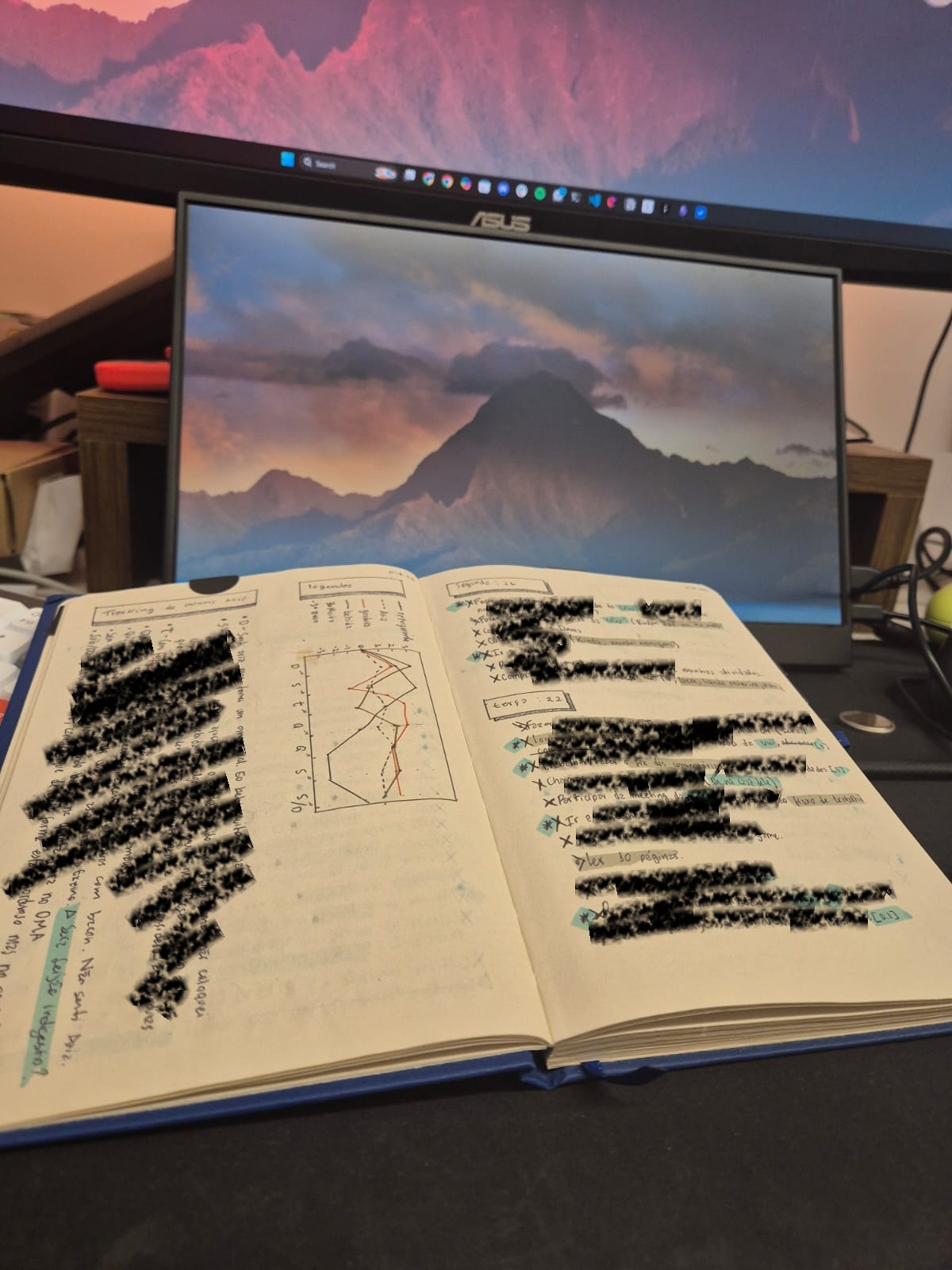
- Metrics and Dashboards: In each cycle, I create custom charts and trackers to visually monitor progress and track goals — such as my ongoing effort to consistently hit the gym! 💪
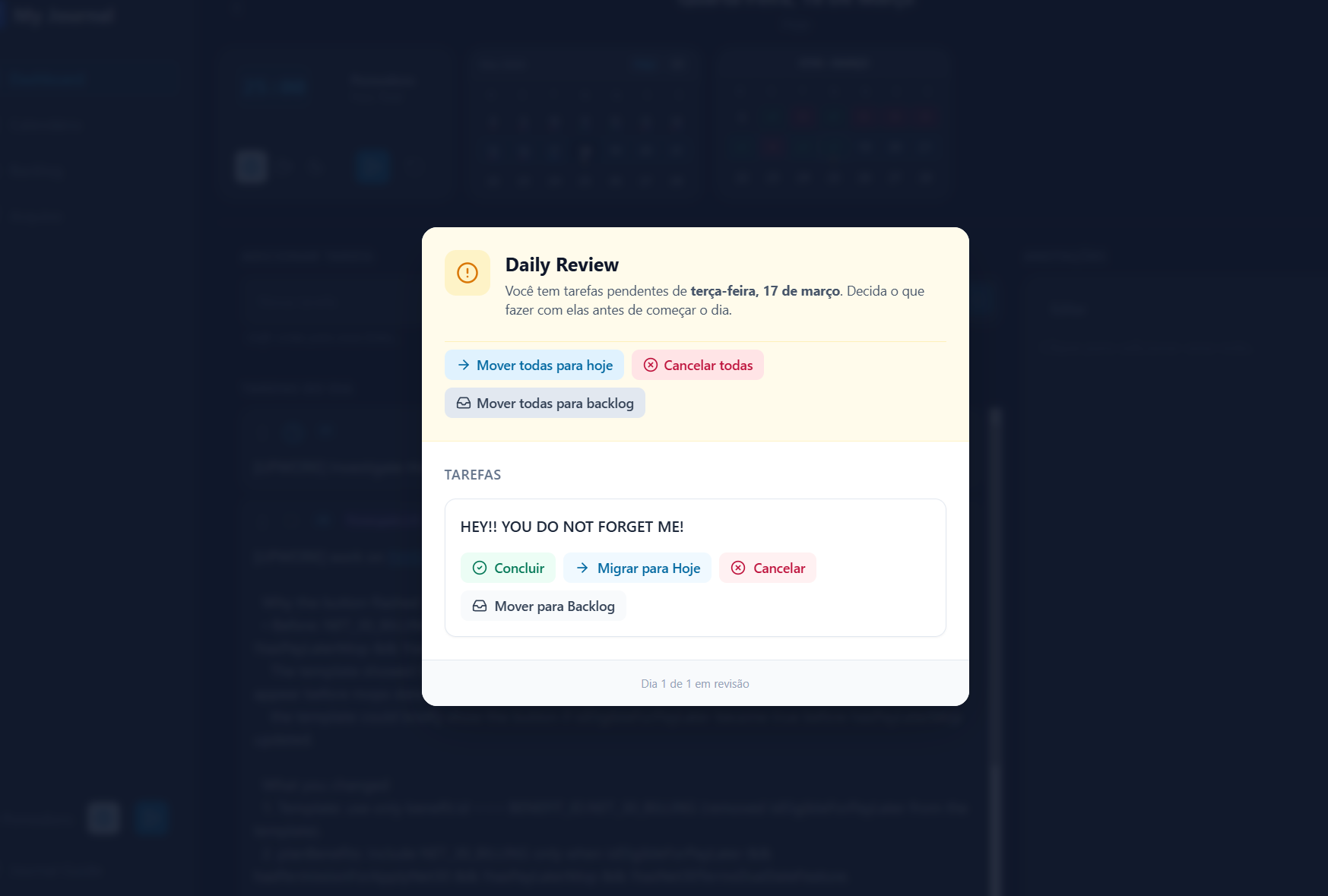
- Daily Review: Never start a day without reviewing what was planned and what was accomplished the previous day. This habit keeps focus and discipline sharp while encouraging reflection on priorities.
- Basic To-do List: Simple, yet with strict rules: strike out completed tasks, migrate uncompleted ones to the next period, and avoid endless lists of tasks that never get done.
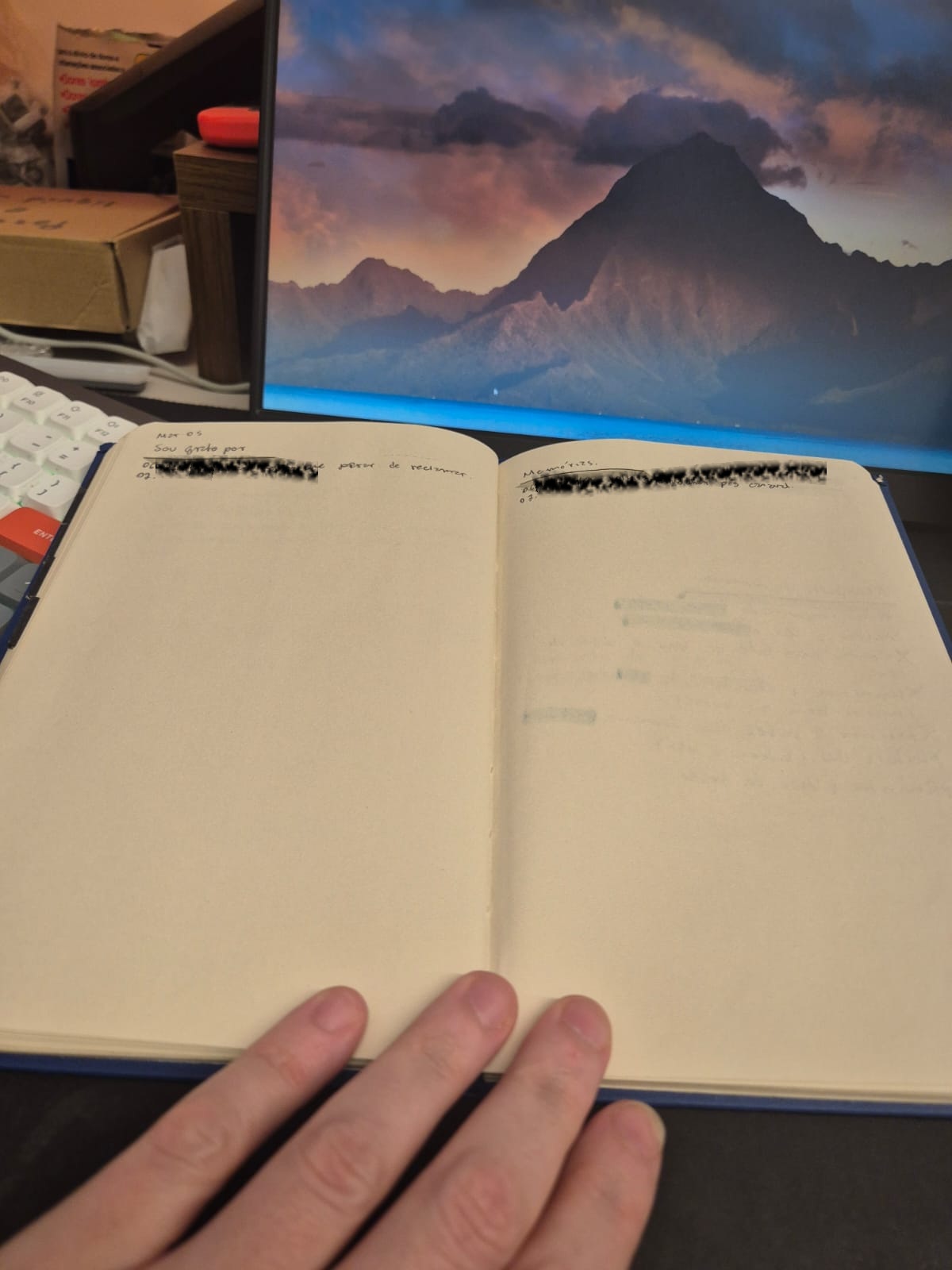
Below are some photos of my physical Bullet Journal back when I did everything on paper. Notice how some pages are complete while others remain unfinished:
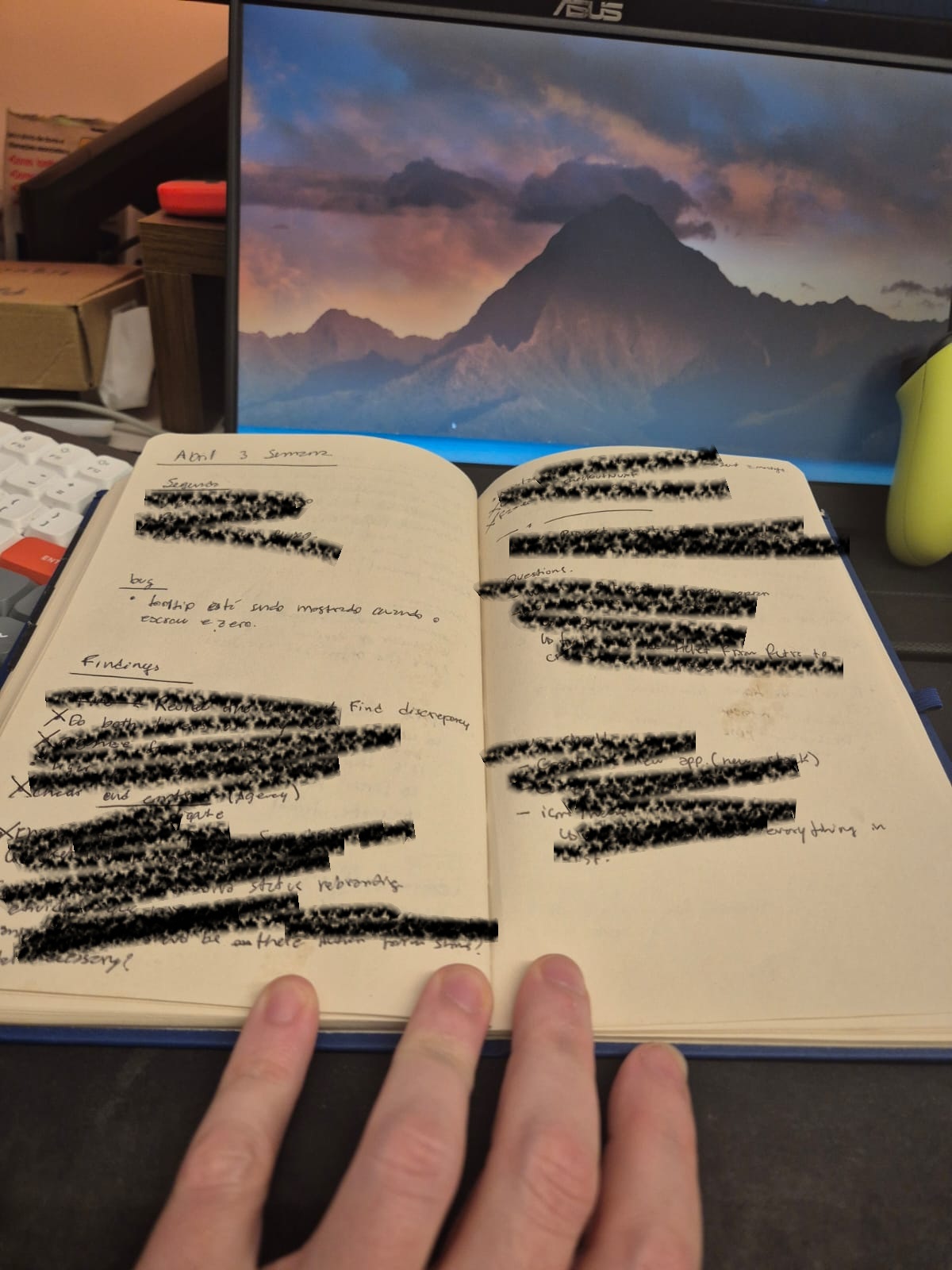
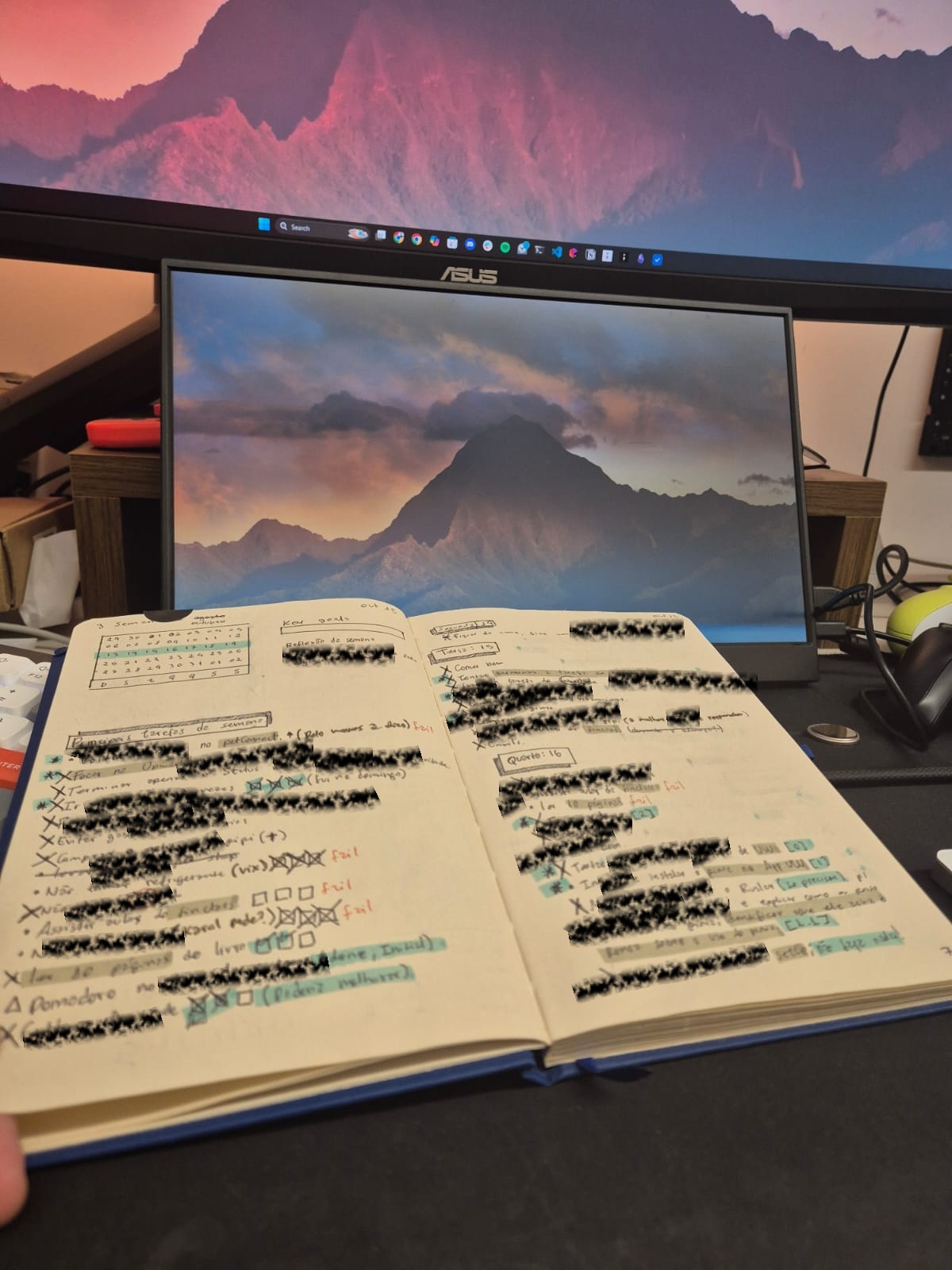
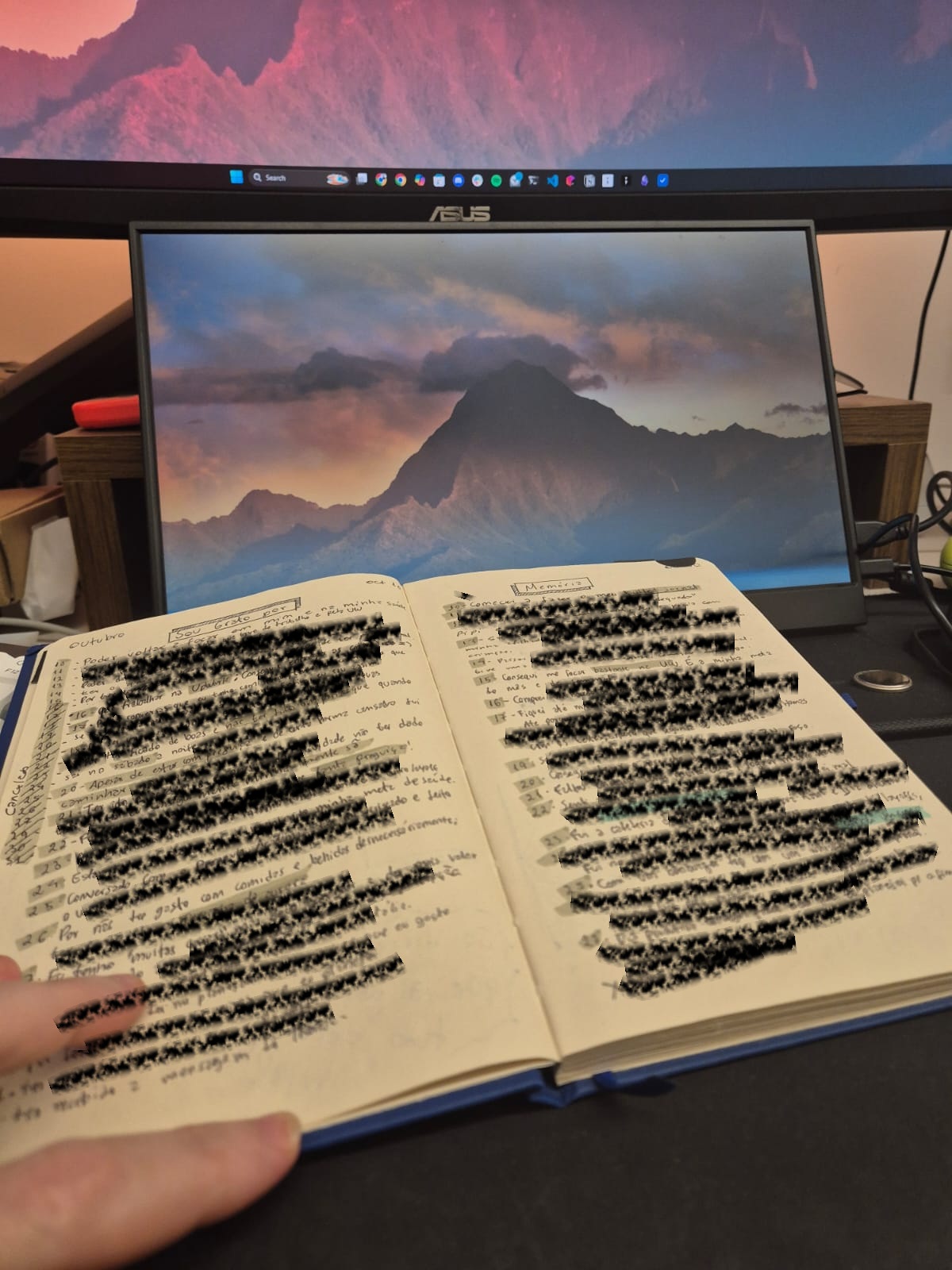
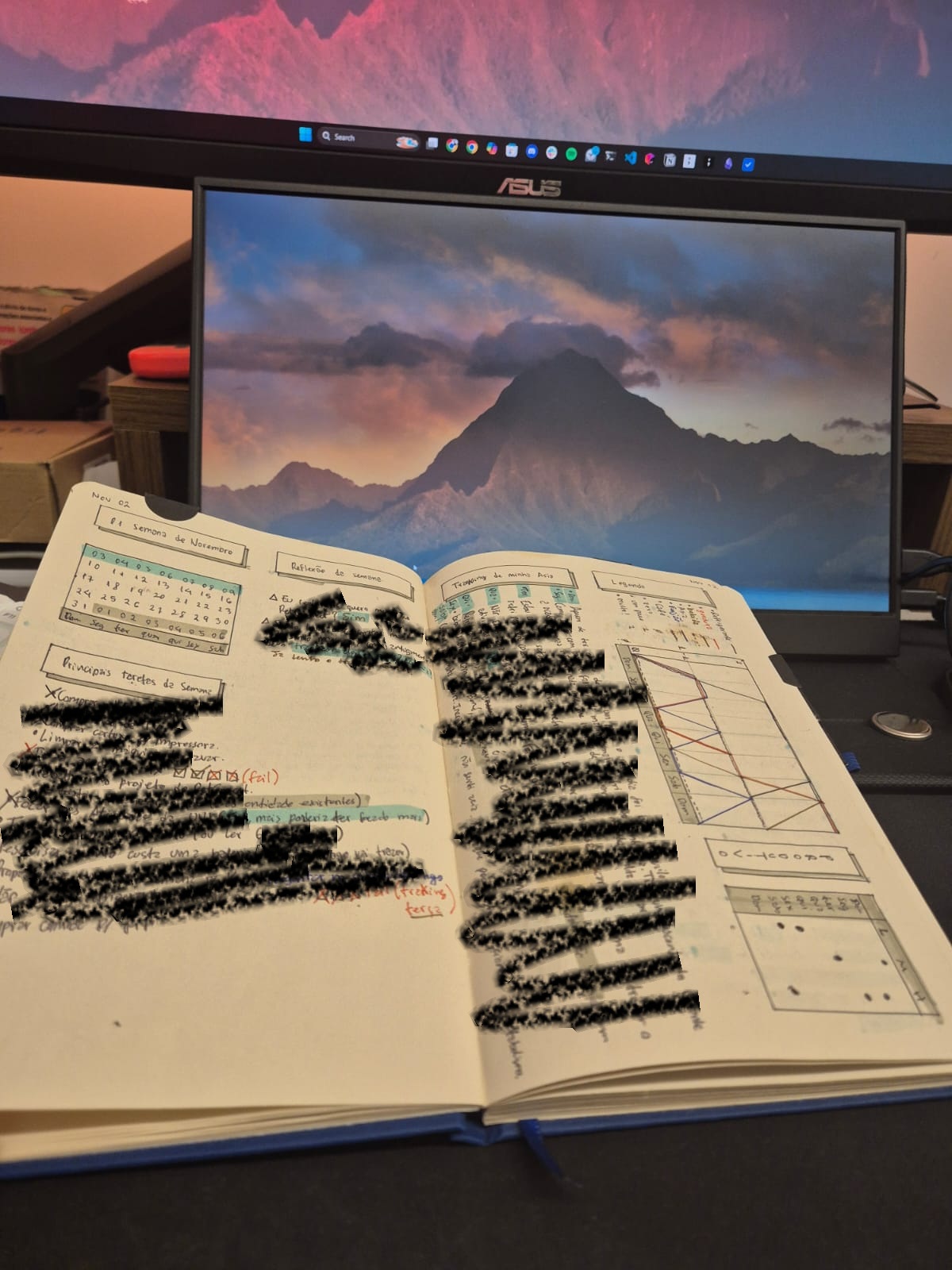
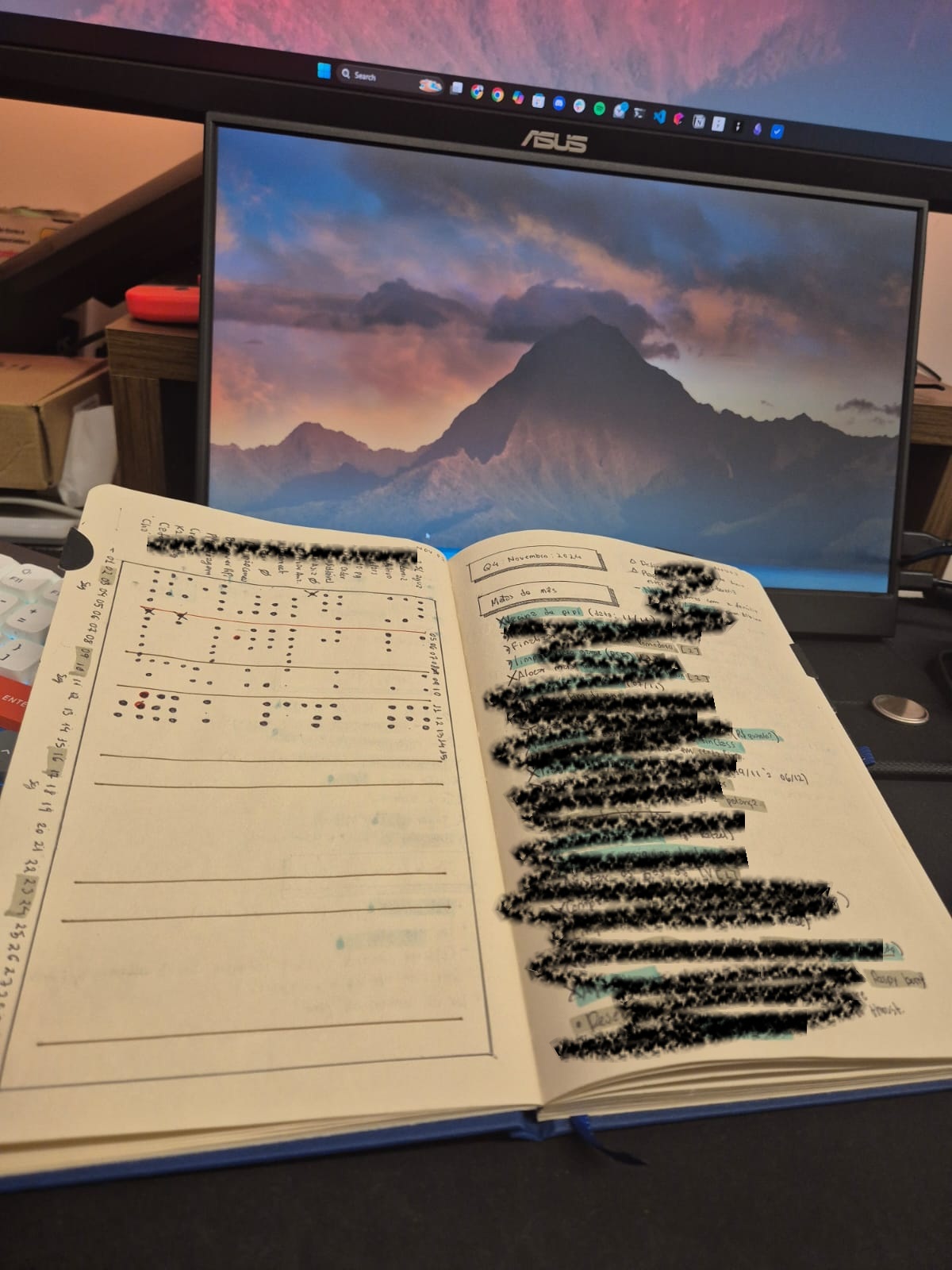
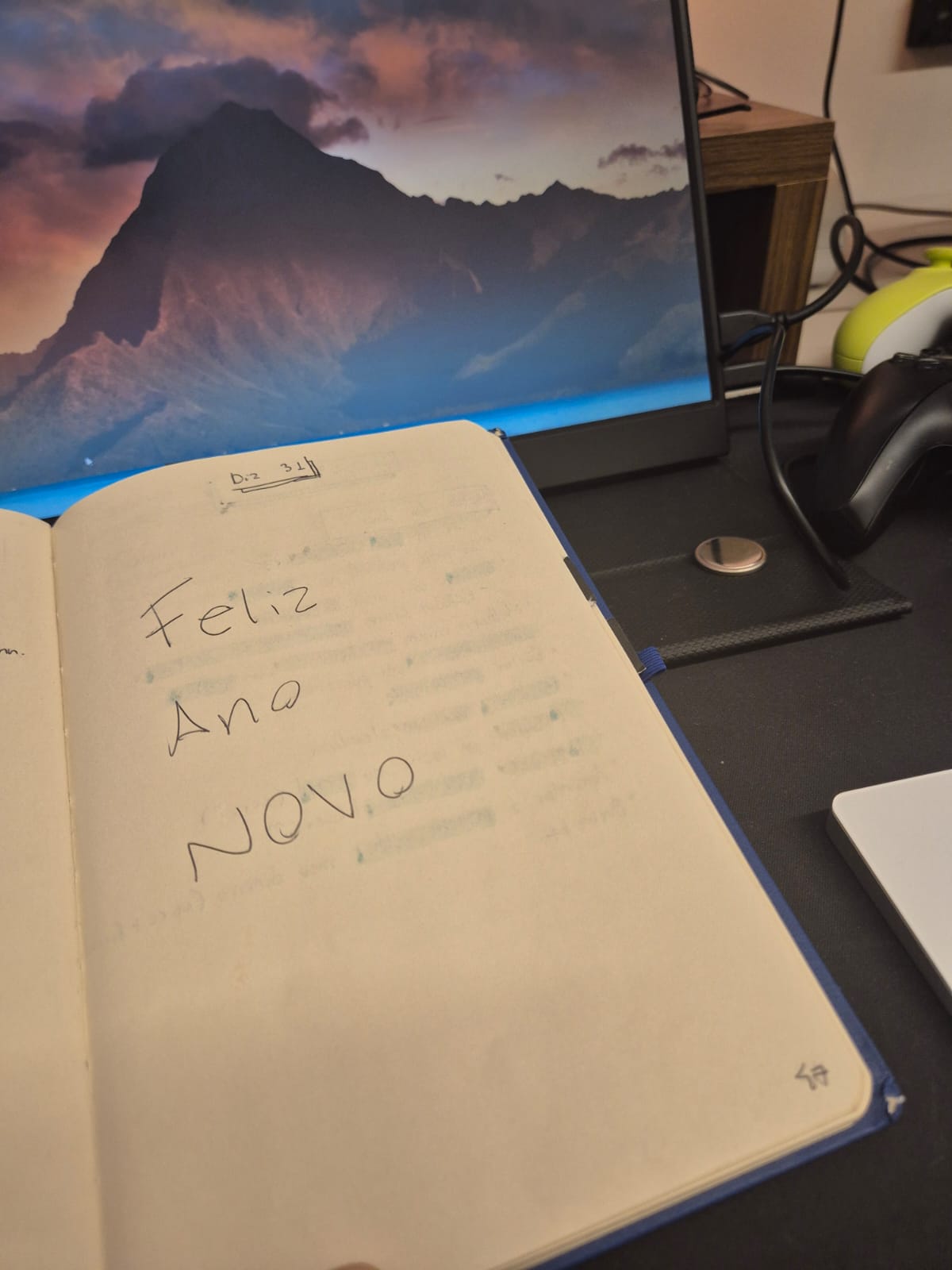
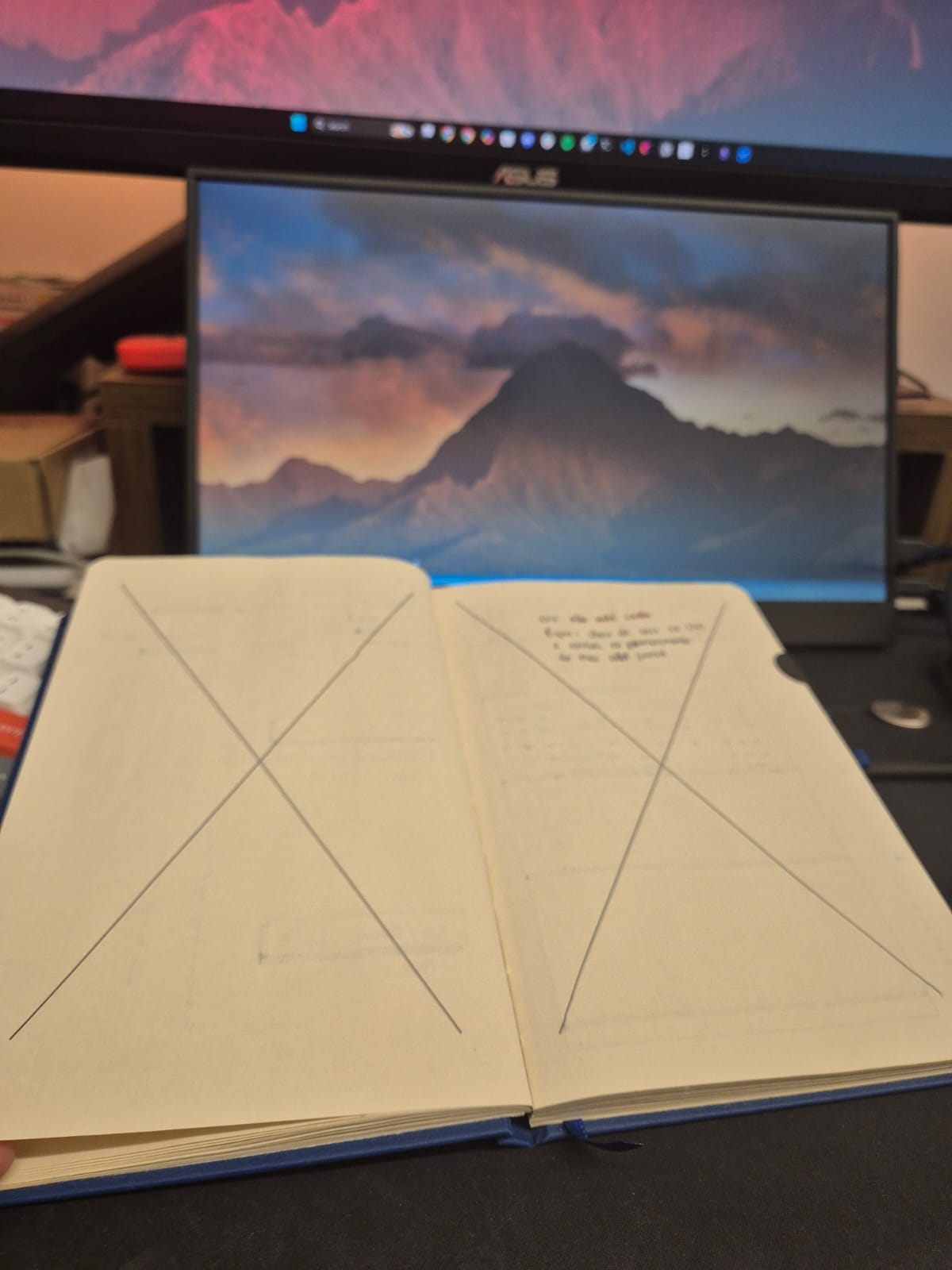
After laying out these rules, I realized something: was I building a system "identical" to what I use at work every day? 😂
Sprints, Scrum, retrospectives? Well, maybe yes, maybe no. 🤔
In the end, it was a tailored adaptation of the Bullet Journal with an agile, results-oriented focus. It kept me focused and disciplined, with a creative spark that motivated me to keep going.
The Problem: Spoiler... Pure Laziness!
Everything seemed perfect, right? Pretty, organized, rewarding. But there was a major catch: maintenance.
- Setup Friction: Setup time was huge. Designing custom layouts, drawing tables, aligning lines with a ruler... Yes, actual rulers, colored pens — it's time-consuming. When you have a busy engineering workload, spending hours drawing the next week's planner becomes unsustainable.
- Loss of Consistency: Because of this friction, I started each period enthusiastically but abandoned tracking after a few weeks simply for lack of time to "draw the system".
The Reality: I really enjoyed the manual process, but the "duty" to redraw metrics every 15 days eventually killed my motivation. The satisfaction of a filled tracker no longer outweighed the effort to prepare it.
This led to the inevitable software engineer reflection: "Why not automate the tedious part and keep only the useful part?"
"Wait, couldn't you just buy a ready-made planner or download any generic to-do app?" Sure, I could. But I wanted my methodology, with my rules, without conforming to third-party workflows.
The Solution: My Journal APP
Born out of that exact friction and laziness was My Journal!
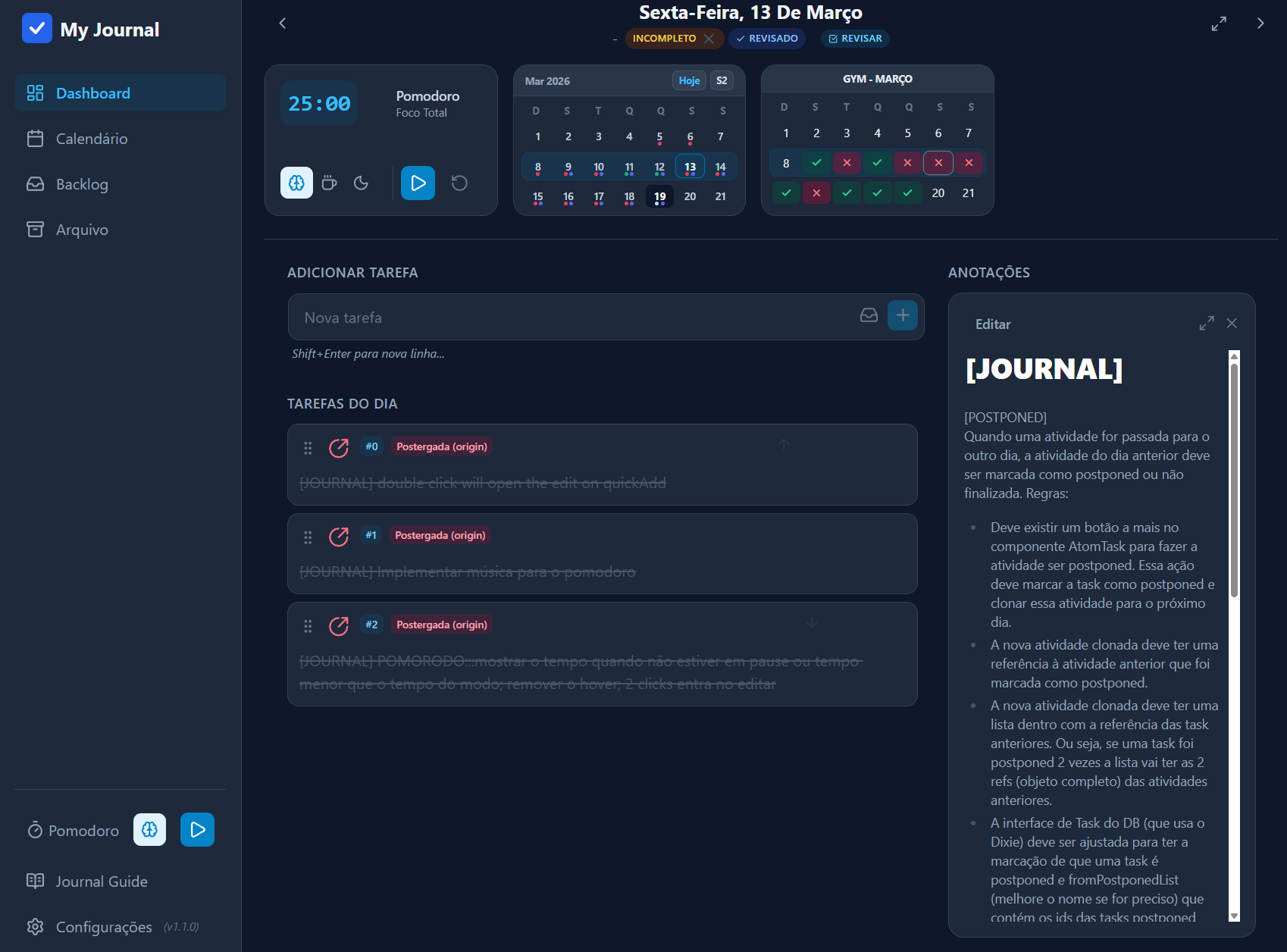
It is a full web application built by me — currently under active development (as of March 18, 2026) — with the sole purpose of organizing my personal and professional life efficiently without paper friction or weekly layout setup.
It is 100% inspired by the paper journal method. It enforces the same rules (such as habit tracking and cycle reviews) in a digital format. All the table drawing, chart calculation, and next-week prep have been automated. I just open it, log what I need, and close it.
The system is live, hosted directly in my home server cluster. It's a PWA (Progressive Web App) running locally on the client using IndexedDB for local-first storage.
The best part? I decided to open access. It's completely free to use if you like:
👉 Access here: journal.rdpedrosa.dev
To help new users, I also wrote a User Guide explaining the logic of the system and how I structure my routine inside it. Feel free to explore and send me feedback or suggestions. Constructive feedback is always welcome! ❤️
Remember: it is an "opinionated" app, originally built to solve my own problem and follow my mindset. It might not fit your workflow perfectly... or it might be the exact tool you've been searching for! Who knows?